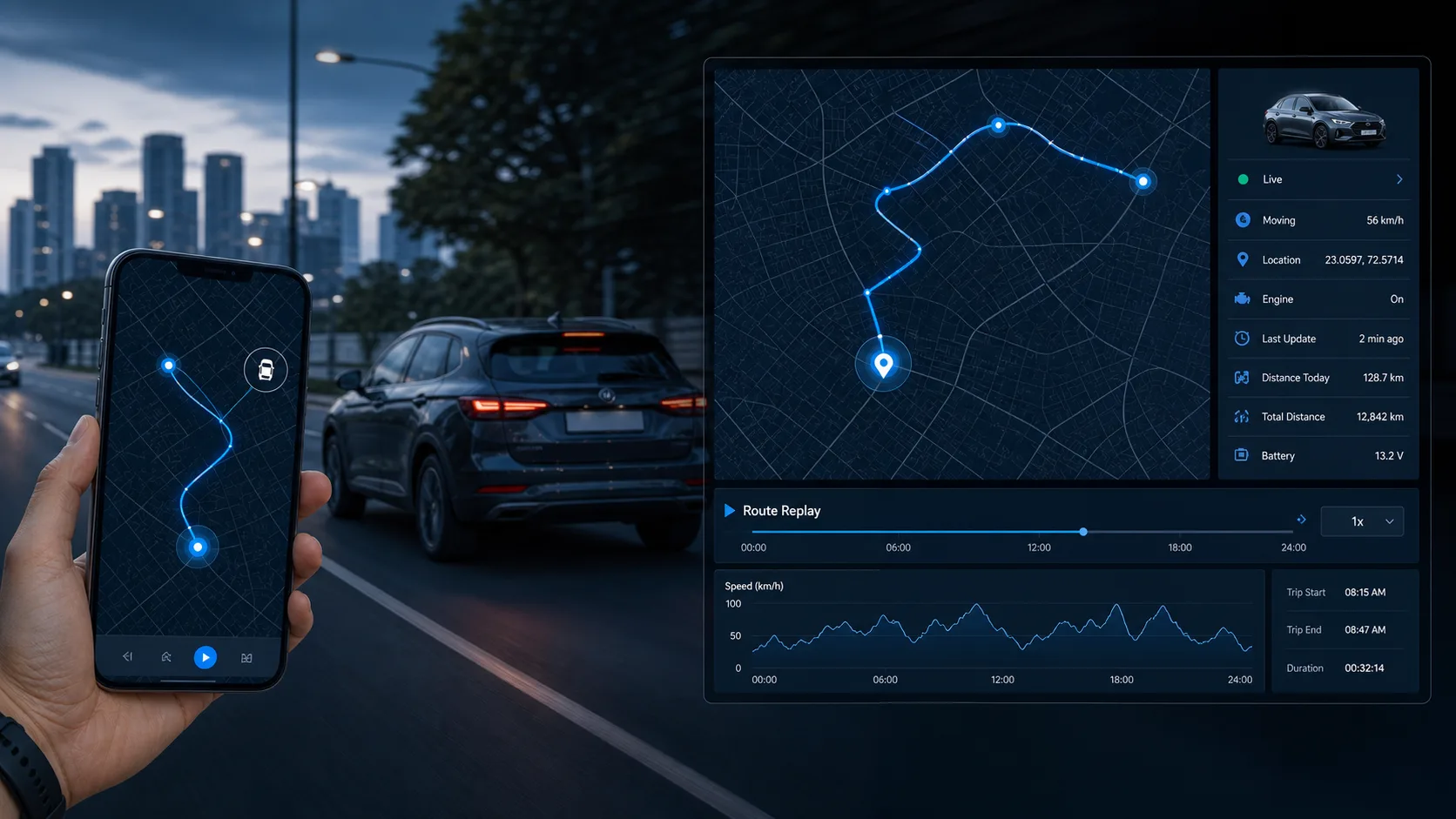
Live vehicle visibility for Indian business operations
A vehicle tracking system in India is no longer just a location screen. Businesses use tracking to understand where vehicles are, whether routes are being followed, how long vehicles stay at stops and when something unusual needs attention. That matters for logistics, field service, delivery networks, school transport and route-based commercial work.
Phoenix Secure focuses on that operating view. Instead of treating every vehicle the same, the platform can be aligned to how a business actually runs. A dispatch-heavy fleet needs quicker movement awareness. A service business may care more about visit timing and route proof. A transport fleet may prioritise long-route visibility and exception escalation.
What businesses expect from a vehicle tracking system in India
The most valuable systems give teams information they can act on during the day, not just reports after the fact. That typically includes live location, route history, halt review, alert notifications and a consistent way to check which vehicles need attention first. For many businesses, that reduces follow-up calls, improves response speed and creates better operational discipline.
In Indian cities and intercity routes, traffic variation and route complexity make timely visibility more important. If a driver is delayed, a vehicle halts longer than expected or a route changes suddenly, the system should make that visible quickly. Phoenix Secure addresses these needs through practical GPS tracker hardware, route monitoring features and a workflow that fits daily operations.
For teams comparing direct hardware with broader operational coverage, this page sits between a pure GPS Tracker India query and a broader Fleet Management System India search. It is designed for users who need live monitoring, not only theft protection.
Common use cases for vehicle tracking in India
Commercial fleets often use tracking to monitor route adherence, dispatch performance and time spent between stops. Sales or service businesses use it to confirm field movement and reduce uncertainty around visit completion. School transport teams use it to improve route awareness and parent communication. Delivery teams use it to supervise high-frequency routes without relying only on manual updates.
Phoenix Secure also supports mixed operations where one company may run cars, vans, bikes and trucks together. In those cases, the value comes from one monitoring workflow with different installation profiles depending on vehicle type. Businesses that need a deeper operational model should also compare our fleet management capabilities and truck GPS tracking page.
How to evaluate the right system before rollout
Before deployment, define what matters operationally. Do you need live tracking only, or also route reports and exception alerts? Are you monitoring a small number of vehicles in one city, or a route network across states? Are vehicles company-owned, driver-assigned or shared? These answers shape the right hardware and workflow more than a long feature list does.
Phoenix Secure can help you compare requirements against available hardware on the products page, review how the tracking layer works on vehicle tracking, and answer planning questions through the FAQ and contact page.
Frequently asked questions about Vehicle Tracking System India
What is a vehicle tracking system in India?
It combines GPS hardware and a monitoring platform to show live movement, route history and operational alerts.
Who needs a vehicle tracking system?
Transport operators, service businesses, school transport teams, delivery operations and commercial fleets.
Can it track route history and halts?
Yes. Route review and stopping patterns are part of day-to-day monitoring use cases.
Does it support business operations?
Yes. It supports dispatch awareness, route verification and faster response to exceptions.
Can the system be used on trucks, vans and field vehicles?
Yes. It can be planned for multiple commercial vehicle categories.
How do I get started?
Start with vehicle count, route pattern, alert priorities and reporting needs.